

If you want to know how to apply for work visa in Texas USA, the process is governed entirely by federal immigration law, not Texas state law. Texas has no separate work visa system. The U.S. Citizenship and Immigration Services (USCIS) and the U.S. Department of State handle all work visa applications regardless of which state you plan to work in.
That said, Texas is one of the top destination states for foreign workers, with major industries in energy, technology, healthcare, agriculture, and construction actively sponsoring visa applicants. This article explains every step, every visa category, and every requirement you need to know.
To apply for a work visa in Texas USA, your employer files a petition with USCIS, you complete Form DS-160, pay visa fees, schedule a consulate interview, and attend the appointment with required documents. Texas follows federal immigration law. The process takes weeks to months depending on visa type and your country of origin.
Also Read: Uncontested Divorce Process in Texas
Does Texas Have Its Own Work Visa Laws?
No. Immigration law is exclusively federal in the United States. Individual states, including Texas, cannot issue work visas or create their own immigration pathways.
Texas does have state-level laws that intersect with immigration, including:
- E-Verify: Texas does not mandate E-Verify for all private employers, but state agencies and public contractors must use it under Texas law
- Employment discrimination: Texas Labor Code and federal law prohibit discrimination based on national origin or citizenship status in hiring
- Professional licensing: Some Texas licensing boards have citizenship or legal status requirements for obtaining professional licenses
- Driver’s licenses: Texas issues driver’s licenses to DACA recipients and certain visa holders
For work authorization itself, everything runs through the federal system. Knowing how to apply for work visa in Texas USA means knowing the federal process inside and out.
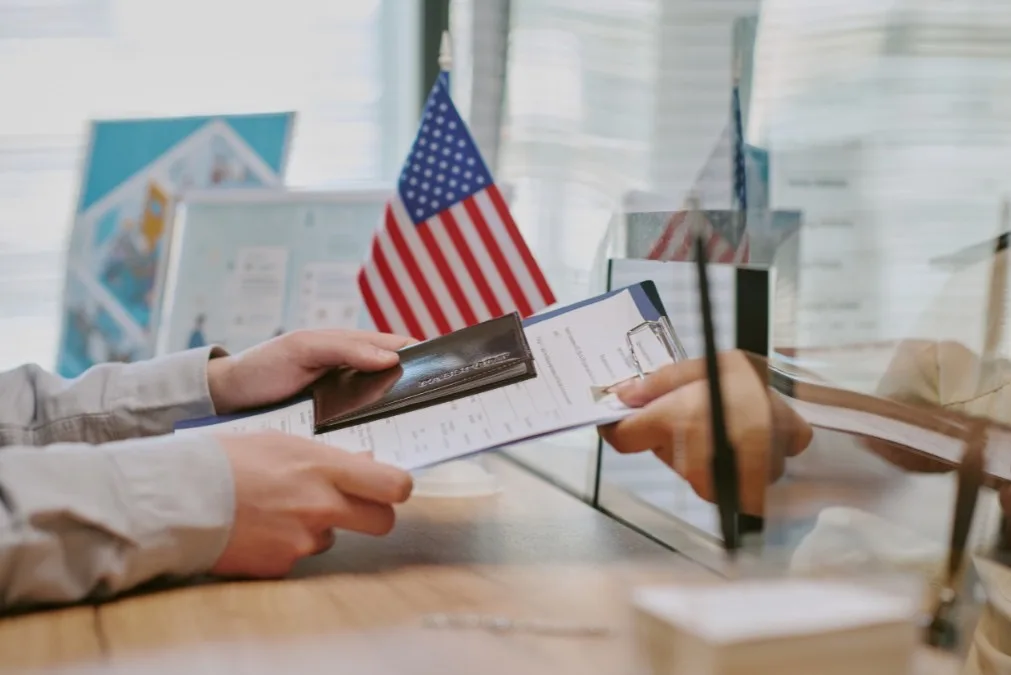
Types of Work Visas Available for Texas Workers
The United States offers multiple nonimmigrant (temporary) and immigrant (permanent) work visa categories. The right visa depends on your job type, education level, employer, and long-term goals.
Nonimmigrant (Temporary) Work Visas
| Visa Type | Who It Is For | Employer Petition Required | Annual Cap |
|---|---|---|---|
| H-1B | Specialty occupations requiring a bachelor’s degree or higher | Yes | 85,000 per year |
| H-2A | Temporary agricultural workers | Yes | No cap |
| H-2B | Temporary non-agricultural workers (seasonal) | Yes | 66,000 per year |
| H-3 | Trainees or special education workers | Yes | No cap |
| L-1A / L-1B | Intracompany transferees (managers/executives or specialized knowledge) | Yes | No cap |
| O-1 | Individuals with extraordinary ability in science, arts, education, business, or athletics | Yes | No cap |
| TN | Canadian and Mexican professionals under USMCA | Yes (for Mexicans) | No cap |
| E-3 | Australian professionals in specialty occupations | Yes | 10,500 per year |
| J-1 | Exchange visitors (includes some work categories) | Program sponsor | No cap |
| F-1 OPT/CPT | Students on practical training | Employer | No cap |
Immigrant (Permanent) Work Visas
Immigrant work visas lead to a green card (permanent residency). They fall into preference categories:
- EB-1: Priority workers (extraordinary ability, outstanding professors/researchers, multinational executives)
- EB-2: Professionals with advanced degrees or exceptional ability
- EB-3: Skilled workers, professionals, and unskilled workers
- EB-4: Special immigrants (religious workers, certain broadcasters, etc.)
- EB-5: Immigrant investors
How to Apply for Work Visa in Texas USA: Step-by-Step
The process differs slightly depending on your visa category, but most employer-sponsored nonimmigrant work visas follow this general sequence.
Step 1: Secure a Job Offer from a Texas Employer
Most U.S. work visas require an employer to sponsor you. You cannot petition for most work visas on your own. Your employer must be a legitimate U.S. business willing to file a petition on your behalf and, in many cases, pay your application fees.
Before the employer can file, confirm:
- The job qualifies under the visa category you are applying for
- The employer is registered with USCIS and has an Employer Identification Number (EIN)
- The employer understands their legal obligations as a sponsor (wage requirements, working conditions, etc.)
- The position meets any prevailing wage requirements set by the Department of Labor
Step 2: Employer Files a Labor Condition Application (H-1B and Some Others)
For H-1B visas and certain other categories, the employer must first file a Labor Condition Application (LCA) with the U.S. Department of Labor through the FLAG system (Foreign Labor Application Gateway).
The LCA certifies that:
- The employer will pay the foreign worker at least the prevailing wage for the position and geographic area
- The employer will pay the foreign worker at least the actual wage paid to similarly employed workers
- Employing the foreign worker will not adversely affect working conditions of U.S. workers
- There is no strike or lockout at the worksite
LCA processing typically takes 7 business days. Once certified, the LCA is valid for up to 3 years.
H-2A and H-2B visas require a separate temporary labor certification through the Department of Labor before the employer files the USCIS petition.
Step 3: Employer Files Petition with USCIS
After the LCA is certified (if required), your employer files the appropriate petition with USCIS.
Common petition forms:
| Visa | USCIS Form | Filing Fee (as of 2024) |
|---|---|---|
| H-1B | Form I-129 | $730 base + additional fees |
| H-2A | Form I-129 | $730 |
| H-2B | Form I-129 | $730 |
| L-1 | Form I-129 | $730 + $500 fraud prevention fee |
| O-1 | Form I-129 | $730 |
| EB-1/EB-2/EB-3 | Form I-140 | $700 |
Premium processing (Form I-907) is available for many petition types and guarantees a 15-business-day processing decision for an additional $2,805 fee as of 2024.
USCIS may respond with:
- Approval: Petition approved; proceed to consular processing or change of status
- Request for Evidence (RFE): USCIS needs more information before deciding
- Denial: Petition denied; employer may appeal or refile

Step 4: Complete Form DS-160 (Consular Processing)
If you are outside the United States when your petition is approved, you complete consular processing at a U.S. embassy or consulate in your home country.
Fill out Form DS-160 (Online Nonimmigrant Visa Application) at ceac.state.gov. This form collects your biographical information, travel history, employment history, and other details required for the visa interview.
You will need to provide:
- Your passport (valid for at least 6 months beyond your intended period of stay)
- Your approved USCIS petition approval notice (Form I-797)
- A recent passport-style photo meeting U.S. photo requirements
- Your employment history for the past 10 years
- Your travel history for the past 5 years
- Information on any prior U.S. visa applications or refusals
Step 5: Pay the Visa Application Fee (MRV Fee)
After completing DS-160, pay the Machine Readable Visa (MRV) fee through the U.S. embassy or consulate website for your country. The fee for most work visas (H, L, O, TN categories) is $205 as of 2024.
Keep your payment receipt. You will need the receipt number to schedule your visa interview appointment.
Some countries also require a visa issuance reciprocity fee based on what the applicant’s home country charges U.S. citizens for equivalent visas. Check the U.S. Department of State’s reciprocity schedule for your country.
Step 6: Schedule and Attend Your Visa Interview
Schedule your visa interview appointment at the U.S. embassy or consulate in your country through the embassy’s online scheduling system or the U.S. Visa Appointment Service at ustraveldocs.com.
Wait times for visa interviews vary significantly by country and post:
| Region | Typical Wait Time |
|---|---|
| Canada | 1-4 weeks |
| India (major cities) | 2-12 months |
| Mexico | 2-8 weeks |
| Philippines | 2-6 weeks |
| United Kingdom | 2-4 weeks |
| Brazil | 2-6 weeks |
Check the U.S. Department of State’s appointment wait time tool for real-time estimates at travel.state.gov.
Bring to your visa interview:
- Valid passport
- DS-160 confirmation page with barcode
- MRV fee payment receipt
- Form I-797 approval notice from USCIS
- Passport-style photo
- Your employer’s support letter explaining your job offer and role
- Evidence of your qualifications (degree certificates, transcripts, professional licenses)
- Your resume or curriculum vitae
- Any previous U.S. visas (passport or separate documents)
- Proof of ties to your home country if applicable
Step 7: Visa Interview at the U.S. Consulate
A consular officer conducts your visa interview. The interview typically lasts 5 to 20 minutes for work visas. The officer reviews your documents and asks questions about your job, employer, qualifications, and plans.
Common interview questions:
- What is your job title and what will you do in the U.S.?
- Who is your employer and where is the worksite located?
- What is your salary?
- How long have you worked in this field?
- Have you previously been to the United States?
- Do you have family in the U.S.?
Answer directly and truthfully. Bring all supporting documents but let the officer guide what they want to see. Do not volunteer excessive information beyond what is asked.
After the interview, the officer will either:
- Approve your visa: Your passport is retained for visa stamp printing, typically returned within 3-5 business days
- Issue a 221(g) administrative processing notice: Additional review required, timeline varies from days to months
- Refuse your visa: The officer provides a written reason; some refusals can be overcome with additional evidence
Step 8: Enter the United States
Once your visa is stamped in your passport, you can travel to the United States. Your visa allows you to present yourself at a U.S. port of entry, but it does not guarantee admission.
At the port of entry (airport or land border):
- A Customs and Border Protection (CBP) officer reviews your visa and travel documents
- The CBP officer determines your period of authorized stay and issues Form I-94 (Arrival/Departure Record)
- Your I-94 record is electronic and accessible at i94.cbp.dhs.gov
Your period of authorized stay is listed on your I-94, not your visa. Your visa is an entry document. Your I-94 is your legal status document. Many people confuse the two and overstay because they look at the visa expiration date instead of the I-94.
H-1B Visa: The Most Common Texas Work Visa
The H-1B is the most heavily used work visa for Texas professionals, particularly in Houston (energy and healthcare), Austin (technology), and Dallas (finance and technology).
H-1B key facts:
- Requires a bachelor’s degree or equivalent in a specialty field related to the job
- Employer pays prevailing wage as determined by DOL wage surveys
- Initial period is 3 years, extendable to 6 years
- Subject to an annual lottery (cap) of 85,000 visas (65,000 regular cap + 20,000 U.S. master’s degree exemption)
- H-1B lottery registration opens in March each year for the fiscal year starting October 1
- Spouses of H-1B holders may receive H-4 status; H-4 EAD (work authorization) may be available if the H-1B holder has an approved I-140
H-1B cap-exempt employers (not subject to the lottery):
- Universities and related nonprofit entities
- Nonprofit research organizations
- Government research organizations
Working for a cap-exempt employer allows H-1B filing at any time of year without going through the lottery.
TN Visa: Fast Track for Mexican and Canadian Professionals
The TN visa under the United States-Mexico-Canada Agreement (USMCA) is available to citizens of Canada and Mexico working in specific professional categories.
TN-eligible professions include:
- Engineers (all disciplines)
- Accountants
- Computer systems analysts
- Lawyers
- Scientists (biologists, chemists, physicists, etc.)
- Nurses and physicians (with specific requirements)
- Management consultants
- Economists
Canadian citizens apply for TN status directly at the U.S. port of entry with their job offer letter and credentials. No prior USCIS filing is needed.
Mexican citizens must apply at a U.S. consulate in Mexico using Form DS-160, pay the MRV fee, and attend a visa interview. The process is similar to other nonimmigrant visa categories.
TN status is granted in 3-year increments with unlimited renewals. There is no cap on TN visas.
Texas Immigration Laws and Employer Obligations
While Texas cannot issue work visas, Texas employers who hire foreign workers have specific legal obligations.
E-Verify Requirements in Texas
Texas Executive Order GA-37 (2021) requires state agencies and their contractors to use E-Verify to confirm work authorization. Private employers in Texas are not universally required to use E-Verify, but federal contractors must use it under federal law.
Form I-9 Requirements
Every employer in Texas must complete Form I-9 for every employee hired after November 6, 1986, regardless of citizenship or immigration status. The I-9 verifies identity and work authorization.
Employers must:
- Have each employee complete Section 1 on their first day of work
- Complete Section 2 within 3 business days of the employee’s start date
- Accept any document or combination of documents from the I-9 Lists of Acceptable Documents that appear genuine and relate to the employee
- Retain I-9 forms for 3 years after hire or 1 year after termination, whichever is later
- Make I-9 forms available for inspection by DHS, DOL, or DOJ officials
Employers cannot:
- Demand specific documents beyond what the I-9 process allows
- Discriminate based on citizenship status or national origin in I-9 verification
- Refuse to hire workers with temporary work authorization (EAD, H-1B, TN, etc.)
Texas Workforce Commission and Foreign Workers
The Texas Workforce Commission (TWC) enforces state wage and hour laws for all workers, including visa holders. Foreign workers on H-1B, H-2A, H-2B, and other visa categories have the same wage and hour rights as U.S. workers under Texas law.
If your Texas employer pays you less than your visa-required wage or the Texas minimum wage, you can file a wage claim with the TWC or a complaint with the Department of Labor’s Wage and Hour Division.
Maintaining Work Visa Status in Texas
Getting your visa is only the beginning. Maintaining valid status requires ongoing attention.
Key rules to stay in status:
- Work only for your sponsoring employer (employer-specific visas like H-1B and L-1 restrict you to your petitioning employer)
- Do not work in a different job title or location not covered by your approved petition without an amended petition
- Maintain valid I-94 status; do not overstay your authorized period
- Apply for extensions before your status expires
- Notify your employer and immigration attorney of any changes to your job duties, salary, or work location
- Keep copies of all immigration documents including approval notices, I-94, and visa stamps
- Carry your visa approval notice and I-94 printout when traveling domestically
Overstaying your authorized period has serious consequences. Overstays of more than 180 days but less than one year trigger a 3-year bar from re-entering the U.S. Overstays of one year or more trigger a 10-year bar.
Frequently Asked Questions
Can I apply for a work visa in Texas without a job offer?
For most work visa categories, no. The majority of U.S. work visas require an employer to sponsor and petition for you. Exceptions include the O-1 with a self-petition agent and EB-1A for extraordinary ability, where individuals can self-petition without a specific job offer.
How long does it take to get a work visa for Texas?
Processing times vary widely. H-1B standard processing takes 3-6 months; premium processing takes 15 business days. H-2A and H-2B take 30-60 days. TN for Canadians is issued same-day at the border. Add consulate scheduling time, which ranges from days to over a year depending on your country.
Can my spouse work in Texas on my work visa?
It depends on your visa type. H-4 spouses of H-1B holders may obtain an H-4 EAD work permit if the H-1B holder has an approved I-140. L-2 spouses of L-1 holders are now automatically authorized to work. TN and O-1 dependent spouses are generally not authorized to work without their own independent work visa.
What happens if my Texas employer goes out of business while I am on an H-1B?
You have a 60-day grace period after your H-1B employment ends involuntarily to find a new employer, change status, or depart the U.S. A new employer can file an H-1B transfer petition during this period. The grace period applies once per authorized validity period.
Does Texas have any state immigration enforcement that affects work visa holders?
Texas has state-level immigration enforcement laws including Senate Bill 4, which deals with local law enforcement cooperation with federal immigration authorities. Work visa holders who maintain valid status are generally not affected by state enforcement efforts, but carrying immigration documents is advisable.
Can I switch jobs in Texas while on an H-1B visa?
Yes. H-1B portability allows you to change employers if your new employer files an H-1B transfer petition before your current status expires and you have been in valid H-1B status for at least 180 days after your first approval. You can begin working for the new employer as soon as the transfer petition is filed, not just after approval.
Conclusion
Knowing how to apply for work visa in Texas USA means navigating a federal system that covers everything from the initial employer petition through USCIS to the consulate interview and port of entry admission. Texas follows federal immigration law, but state rules on E-Verify, employer obligations, and worker protections still affect daily work life. Pick the right visa category for your job and qualifications, meet every deadline, and maintain your status carefully once you arrive.

Leave a Comment